

Business Financing Is Approved. Can the Business Support It?

The line of credit was approved.
The equipment quote is still sitting in your inbox, and the vendor wants an answer.
Now there is enough money available to move.
Before you sign, there are three questions worth answering to test whether the business can actually support the commitment.
THE FINANCING GAP
Financing approval answers an important question.
A lender is willing to extend the money under the terms offered.
The business still has a different question to answer.
What happens after we use it?
A new piece of equipment may add capacity.
A line of credit may make an expansion possible.
Financing may let you hire sooner, take on larger work, or make an investment without using all of the cash already in the business.
But the money also creates a new obligation.
Before we decide whether the opportunity deserves a yes, we need a financial picture that shows what the business is already carrying.
Existing debt.
Current cash obligations.
Profitability.
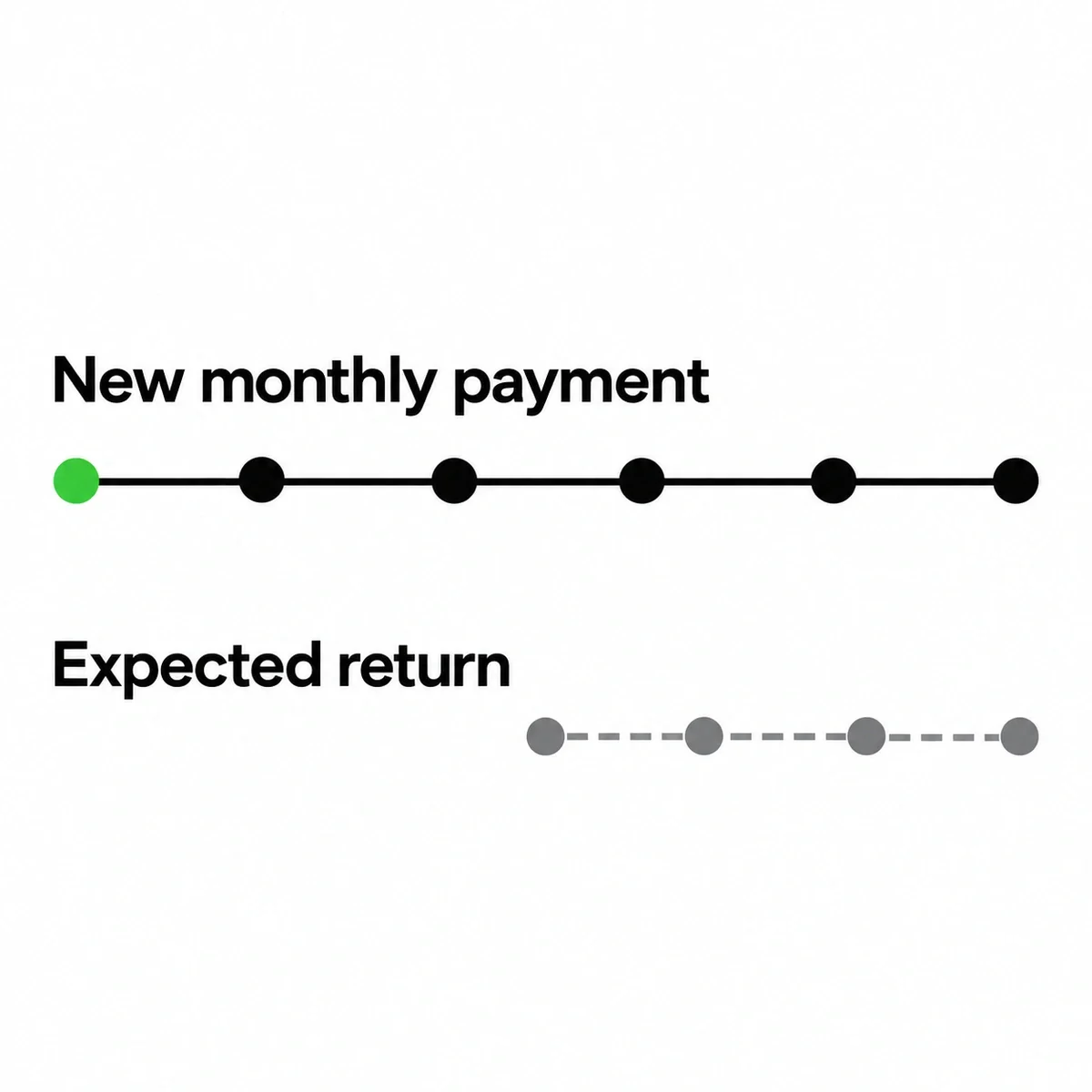
The cash required to operate before the new investment begins producing a return.
That is where accurate financial reporting matters first.
If debt is not recorded correctly, obligations are incomplete, or the balance sheet does not reflect what the business actually owes, the decision starts with the wrong picture.
Once we trust that picture, we can evaluate what the new commitment does to revenue, cash flow, and profit.

WHAT THE BANK APPROVED VS. WHAT THE DECISION REQUIRES
What the approval tells you: Financing is available under the lender’s terms.
What the business must carry: The purchase, repayment, interest, operating costs, and the time it may take for the investment to produce the expected result.
What still has to be tested: Whether the additional obligation fits what the business can support now.
The gap: Access to capital and financial capacity are related, but they are not the same decision.
WHAT IT ACTUALLY REVEALS
The Q3 2026 CFO Survey from Duke University’s Fuqua School of Business and the Federal Reserve Banks of Richmond and Atlanta included 517 financial executives.
Among firms with fewer than 500 employees, 20% reported financial constraints that prevented them from covering costs or pursuing opportunities.
The question is not simply whether money is available.
It is what happens to the business after that money becomes a commitment.
A purchase may create new revenue and still put pressure on cash flow while the return builds.
It may increase capacity and still reduce profit if utilization never reaches the level assumed when the decision was made.
Or it may be exactly the investment the business is ready to make.
We need the numbers to tell us which situation we are looking at.
Your ideas move fast. The numbers show which ones are funded by reality.
THE THREE DRIVER CHECK
One driver rarely moves alone. Revenue, cash flow, and profit have to be reviewed together.
Driver 1, Revenue
What additional revenue is this investment expected to make possible, and how long should it take before that revenue begins?
Driver 2, Cash Flow
What cash leaves the business at the start, what new payments are added each month, and what other obligations have to be carried while the investment ramps up?
Driver 3, Profit
After financing costs, additional operating expenses, labor, maintenance, and other delivery costs, what does the investment need to produce for the business to keep more?
This decision lives primarily in cash flow because the financing creates a new recurring obligation whether the expected result arrives on schedule or not.
But the answer still depends on what happens to revenue and profit.
THREE QUESTIONS WORTH ASKING YOUR OWN NUMBERS
1. What does this investment have to produce for the additional obligation to make sense?
2. Can the business carry the payment and related costs if the expected revenue takes longer to arrive?
3. What will tell us six or twelve months from now that this decision worked?
The approval gives you access to the money.
Your financial picture should tell you whether the business is ready to use it.
If revenue, cash flow, and profit are making that answer difficult to see, the Revenue Cash Disconnect Quiz can help identify which driver deserves a closer look first.
If the question is larger than one driver and you want to see how the pieces fit together before making the commitment, the Strategic Business Snapshot looks at the actual financial picture, the decision in front of you, and the 3 to 5 areas that deserve attention first.
ABOUT FECHTER BUSINESS SERVICES
Fechter Business Services provides financial and business strategy advisory for established founder led service businesses. We make sure the financial picture is accurate, then connect finance, operations, marketing, and sales so owners can see what is driving revenue, cash flow, and profit and what the business can support next.
Frequently Asked Questions
-
Approval means a lender is willing to provide financing under the terms offered. The business still has to evaluate whether the payment, interest, operating costs, and timing of the expected return fit its existing cash obligations and profitability.
-
Start with the existing financial picture: current debt, cash obligations, profitability, and the cash needed to operate. Then add the proposed payment and related costs and test what the investment is expected to change across revenue, cash flow, and profit.
-
Define what the equipment is expected to produce before the purchase is made. Estimate the added revenue or capacity, the complete cost of ownership, the new cash obligation, and how long the return may take. Then test whether the business can still carry the commitment if the result arrives later than planned.
-
Profitability describes what the business expects to keep after costs. Cash flow determines whether the business has enough cash available to make the payments and cover other obligations while the investment ramps up. A profitable investment can still create pressure if the cash requirement arrives before the return.