

What a $3,140 Vendor Overcharge Revealed About This Business Owner's Profit Reports
He caught the vendor overcharging him in about a minute of scanning his statement. It took someone else to show him what it had done to his profit.
This is one story from our work, details changed to protect the client. It shows exactly what changes once you follow a catch all the way through to what it actually means for your numbers, what it was doing to your profit the whole time it sat there.
The Catch
A recurring vendor charge hit his business card multiple times over a few months, about $260 each. No automated system flagged the pattern. No bank alert caught it. He did, scanning his own statement the way he always does.
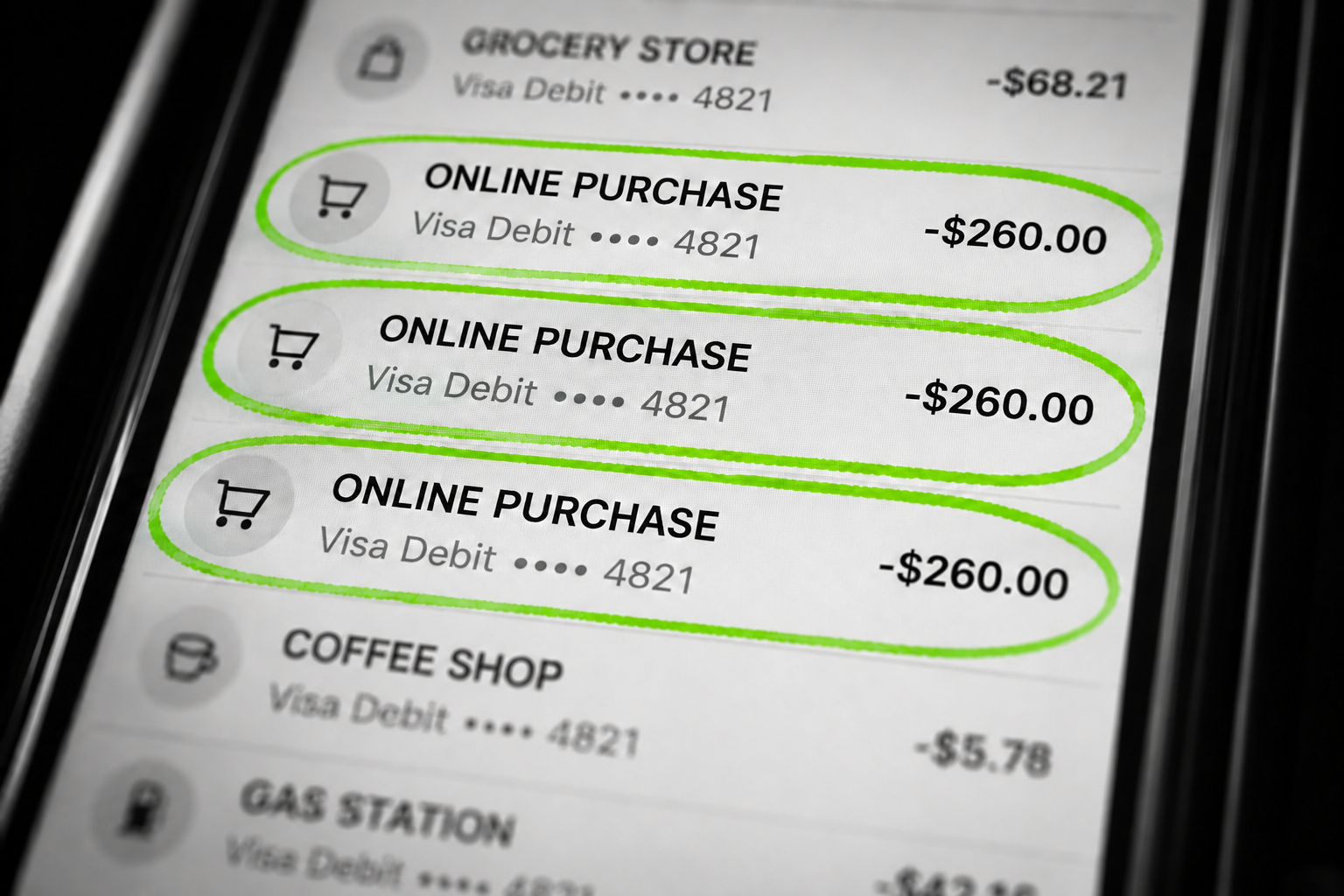
That's the part worth sitting with. The catch was his.
What came next was ours. Once he flagged it, we traced the charges, isolated $3,140 in overstated cost of goods sold (COGS), and corrected the numbers for those months so profit reflected what actually happened. Not a rounded estimate. $3,140, corrected.
If a number like that could be sitting somewhere in your own reports right now, it's worth three minutes to check.
What His Bookkeeper Saw vs. What It Meant
Flagged: a run of unusual transactions, after the month had already closed
Not flagged: what those transactions were doing to his margin, because that read was never part of the report
Reported profit for those months: understated by $3,140
Corrected profit for those months: $3,140 higher, once COGS was fixed
What It Actually Revealed
The part that matters more than the vendor: every one of those charges posted as a normal cost of doing business, which means for months, his profit looked worse than it actually was. Not by a little. By $3,140. He was reading his reports every month. They just weren't built to tell the difference between a real cost and an error wearing a real cost's clothes.
The data was all there. It just wasn't organized to catch this.
56% of small businesses make decisions on incomplete information every single month, even though 75% have an accounting firm or finance team in place. He had a bookkeeper, and a good one likely would have flagged those same charges once the month closed, that's normal bookkeeping. What she wouldn't have flagged, because it isn't part of a standard review, is what those charges were doing to his margin while they sat there.
That's the same gap worth checking in your own numbers. The three-minute Revenue-Cash Disconnect Quiz shows you exactly which of the three drivers is costing you the most right now.

The Three-Driver Check
One driver rarely moves alone. Revenue, cash flow, and profit have to be reviewed together, and this result is proof why:
Driver 1: Revenue — The same $3,140 distorted what a dollar of revenue actually cost to earn.
Driver 2: Cash Flow Timing — Before it ever touched a report, a card charged multiple times over a few months was a cash event first, a P&L line second.
Driver 3: Profit — The COGS were overstated by data that never separated a vendor error from a real cost of doing business.
This result lived in Driver 3, Profit. The same $3,140 touches the other two as well, it distorted the true cost of every dollar of revenue earned during those months, and it sat there because nothing was tracking cash movement against what was actually normal.
Three Questions Worth Asking Yourself
If a vendor overcharged your card multiple times, would you notice before your accountant did?
Could you name your true margin on your top service line right now, without pulling a report?
When your monthly report lands, do you know what to look at first, or do you scan and hope nothing looks wrong?
If any of those took a second too long to answer, that's worth three minutes of your time. The Revenue-Cash Disconnect Quiz tells you exactly which of the three drivers is costing you the most right now, before you spend another month guessing.
Take the Revenue-Cash Disconnect Quiz
