

To measure the impact of a price increase, compare the price clients actually pay, changes in discounting and conversion, delivery hours and direct costs, and payment timing against the result you expected. Review the effect across revenue, cash flow, and profit together. This shows whether the price increase is working, whether one part of delivery needs attention, or whether the decision needs more time.
You raised prices six weeks ago.
Sales are still coming in. Revenue looks fine. But delivery is taking more time than expected. Discounts are starting to show up in sales conversations. And cash does not feel any easier.
So the decision keeps resurfacing in the back of your mind:
Is the price increase actually working, or did the impact move somewhere you are not watching?
What if you could see that answer while the decision was still unfolding?
You could catch the shift across finance, operations, marketing, and sales, see what it is doing to revenue, cash flow, and profit, and adjust before the final result is already baked in.
The decision is only the start
The business keeps responding after the price changes. You need to see how.
Marketing may keep producing the same number of leads, while sales begins hearing different objections or offering more discounts. The price clients actually pay may be lower than you planned.
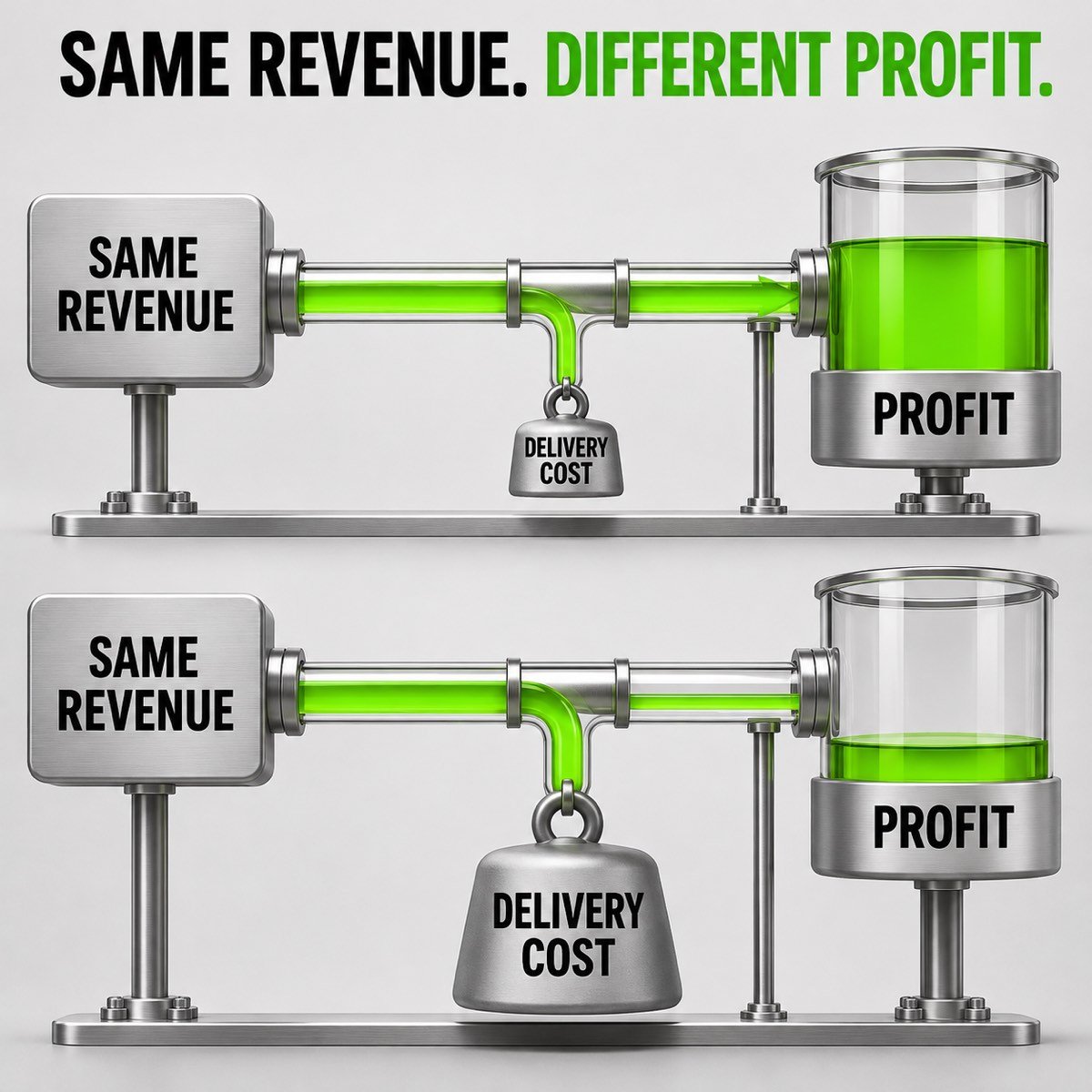
If the work being sold shifts toward a service that takes longer to deliver, operations may need more labor or contractor time. That changes what the business keeps from the sale. Different payment terms can also change how much of the work you need to fund before the cash arrives.
Finance shows the effect on revenue, cash flow, and profit. Operations, marketing, and sales help explain what produced it.
Your reports record the numbers. The whole business picture shows what to do next.
What you thought would happen vs. what is actually happening
What you expected: The higher price would leave you with more profit from the work.
What you need to see now: Whether clients are paying that price, what it costs to deliver the work they are buying, and when the money arrives.
The gap: You can make the right decision and still miss the effect if the information around it is not accurate, current, and usable when you need it.
Fast decisions require accurate, current financial and business information you can actually use, at the time you need it.
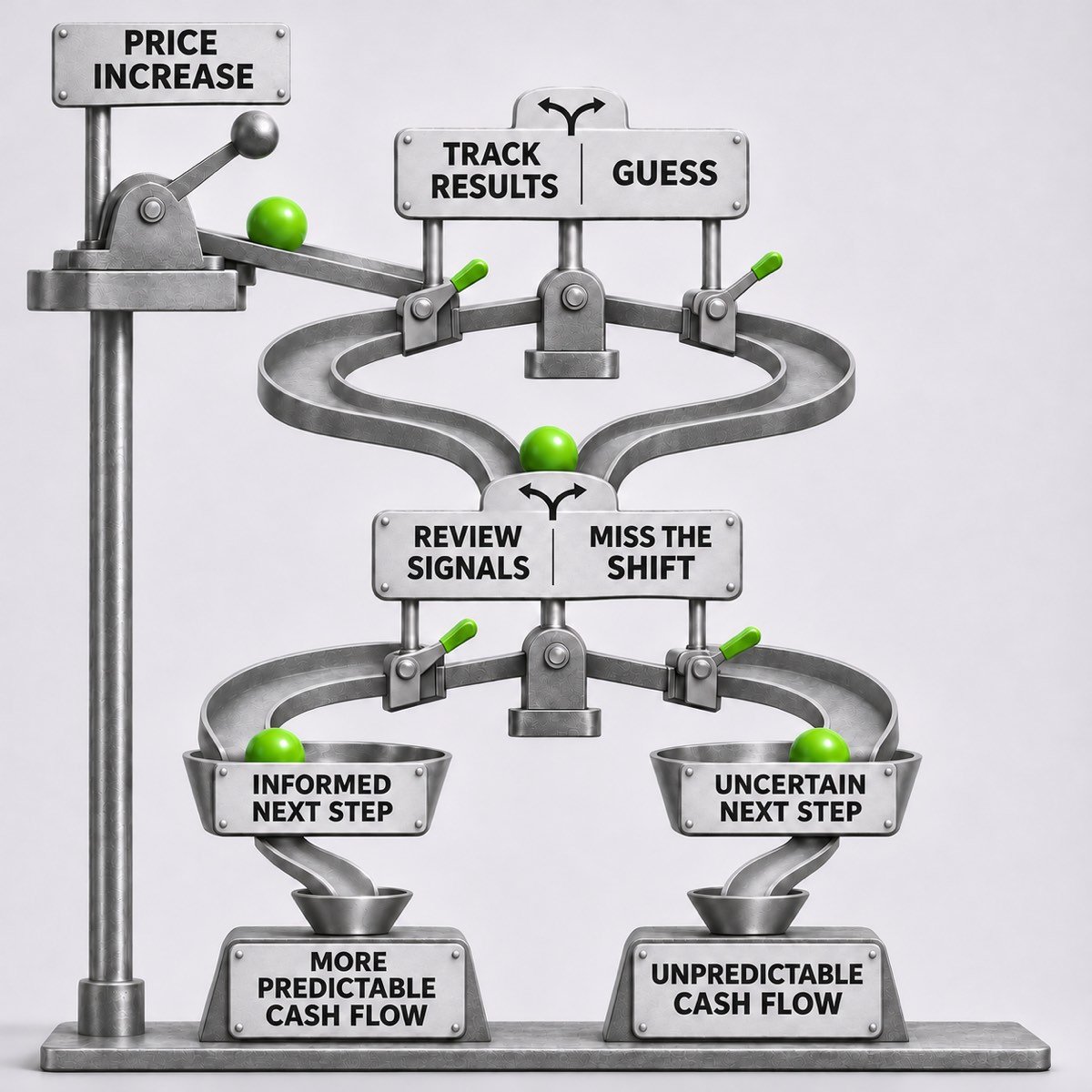
What it actually reveals
Small Business Majority’s September 2026 Voice of Main Street survey found that 65 percent of respondents from its network reported lower profit margins in 2026.
That finding does not tell you why margin changed inside any one business. It also cannot tell you whether a particular pricing decision worked.
Inside your business, you need to connect the result to what changed. If clients are paying the higher price but each project takes more hours to deliver, that gives you a different question to investigate than an increase in discounts.
What changed inside the business that produced that result?
Answering that question gives you a place to act. You can investigate delivery time, review discounting, or check the mix of work before deciding whether the price itself needs to change.
The three driver check
Revenue, cash flow, and profit give you the financial test.
Driver 1, Revenue: Did the pricing change produce the amount and type of revenue you expected? What are sales and marketing showing you about demand, conversion, discounts, and service mix?
Driver 2, Cash Flow: Is the revenue turning into cash on the timing you expected? Did the change create different payment patterns, delivery requirements, or funding needs?
Driver 3, Profit: After the actual cost of selling and delivering the work, is profit improving as you expected?
There is no single home driver in this decision. The useful answer comes from seeing how the decision moves through all three.
See the shift while it still matters
Choose the few measures that show whether the decision is producing what you expected. For a pricing change, those measures might include which inquiries become clients, the prices those clients actually pay, the hours needed to deliver their work, and when their payments arrive.
Compare what you expected with what is happening. Decide when you will review it and what movement would warrant another look.
For example, if clients are accepting the new price but delivery hours are rising, check which services are taking longer and whether the scope changed. If one service accounts for the increase, you have a specific place to investigate before changing pricing across the business.
You may find that the decision needs more time, that one part of delivery needs attention, or that an adjustment is warranted. The information helps you distinguish between those possibilities while you can still influence the result.
That also gives the question a place in your next review, rather than leaving you to keep turning it over in your head.
Three questions worth asking your own numbers
What did you expect this decision to change in revenue, cash flow, and profit?
What should you be seeing across finance, operations, marketing, and sales if that change is happening?
What movement would cause you to investigate or adjust while there is still time to influence the result?
Choose one decision already in motion and identify what you need to see before the next commitment.
Frequently Asked Questions
How do I know whether a price increase is working?
Compare what you expected with the prices clients actually pay, conversion, discounts, delivery hours and costs, and payment timing. Review revenue, cash flow, and profit together rather than judging the result from revenue alone.
Can revenue stay steady while profit falls after a price increase?
Yes. Increased discounts, a shift toward work that takes longer to deliver, or additional labor and contractor costs can change what the business keeps from each sale even when revenue looks steady.
Why does payment timing matter when evaluating a price increase?
Different payment terms can change how much of the work the business must fund before cash arrives. Check when revenue becomes cash and whether delivery creates different funding needs.
Should I change my prices again if delivery hours increase?
First check which services are taking longer and whether the scope changed. You may find that one part of delivery needs attention, that the decision needs more time, or that an adjustment is warranted.
Business Clarity Conversation
If you have a decision in motion and want to know what you should be watching, a complimentary 30 minute Business Clarity Conversation gives you a focused place to work through that question.
Bring the decision. No financial reports are required before the meeting. The goal is to identify what information matters and the practical first steps you can take next.
Book a complimentary Business Clarity Conversation
Explore ways to work together.
Source: Small Business Majority, 2026 Q3 Voice of Main Street Toplines, September 2026. 222 owners participated overall; 215 answered the business impact question.
Related reading: Revenue Is Up. Why Is Margin Still Tight?
About the Author
Randi Fechter is a Fractional CFO and Business Strategy Advisor at Fechter Business Services.